On a Thursday afternoon, 42 requests for production land on your desk. You know which ones are too broad, which ones you’re going to object to, and roughly where the documents you need are located. The problem is the hours that come after: finding the documents, verifying Bates ranges, preparing the response, and doing it all over again weeks later when the missing documents finally arrive. That work doesn’t necessarily require more legal strategy. It requires time. And that’s where Briefpoint tries to step in.
Favorite Law Firm Use Cases: Responding to interrogatories, RFAs and RFPs, generating discovery from a complaint, collecting client responses and documents, and preparing Bates-stamped production packages.
Inside the Product
Briefpoint starts in a surprisingly simple way. You don’t have to create a matter, set up client folders, or prepare a workspace before getting started. You upload the PDF containing the discovery requests you received, and the platform extracts the information it needs to begin. In the demo, we uploaded a set of interrogatories, and Briefpoint automatically turned each request into an individual workflow.
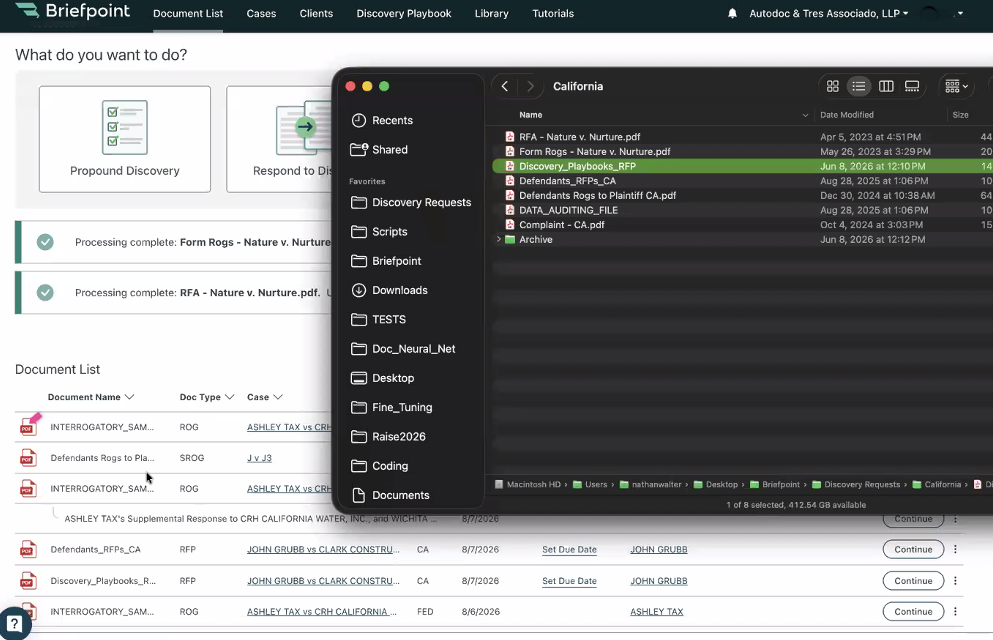
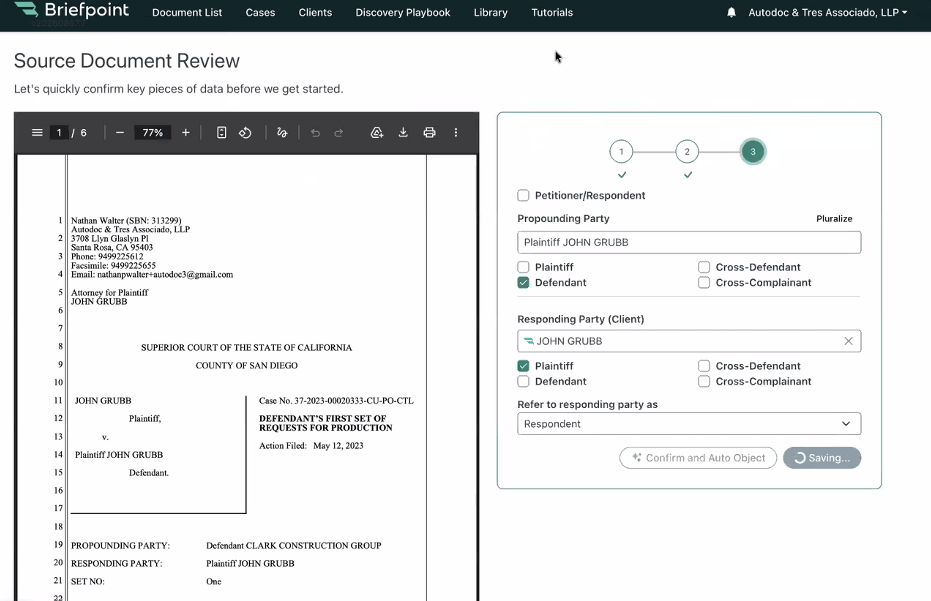
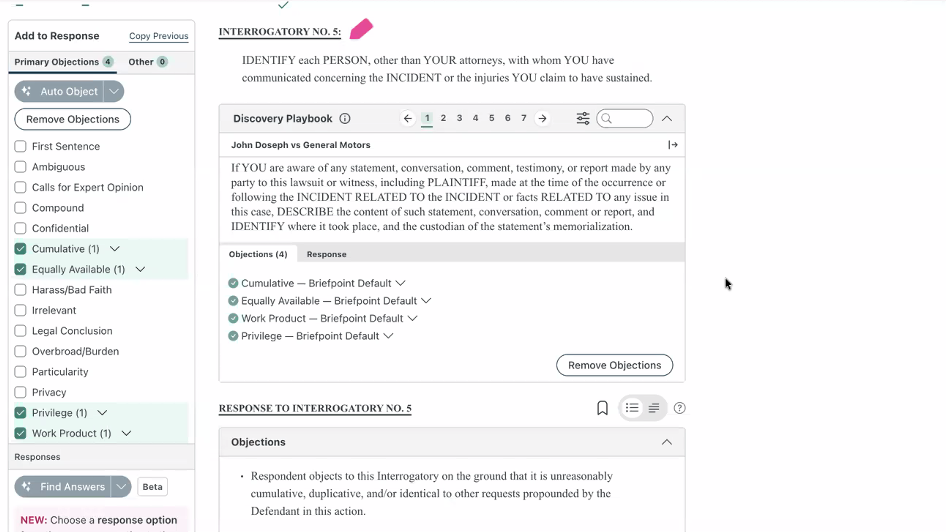
From there, you can work through each request one at a time. Briefpoint extracts the type of discovery, jurisdiction, and parties, and generates the response document structure with the appropriate formatting. Before drafting, you can confirm that the extracted information is correct. You can then select your own objections or let Briefpoint generate them automatically based on each request.
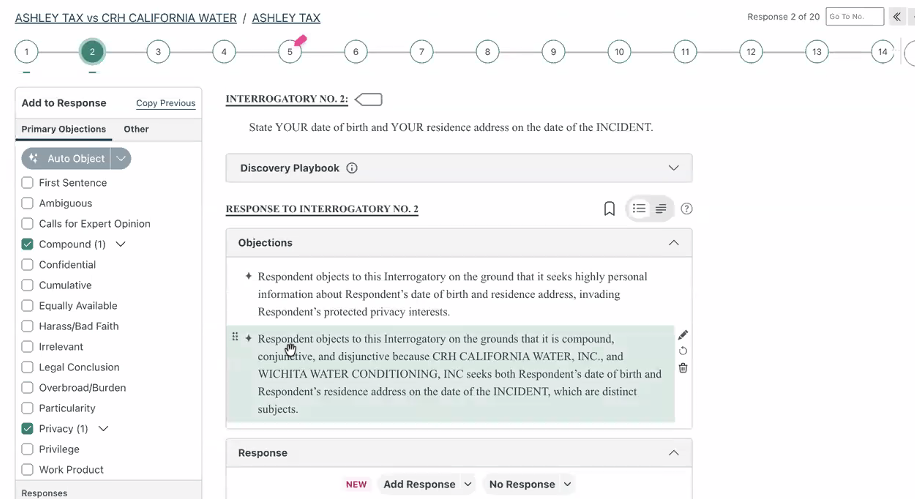
The objections aren’t simply a list of boxes you have to check. Briefpoint drafts the objection against the specific language of each request, and you can edit, remove, or modify it before adding it to the response. In one request that asked for both the client’s date of birth and home address, for example, the system identified both privacy and structural issues in the same question.
The more interesting part comes when you need to answer with information that already exists in the case file. You can upload the case documents and have Briefpoint find the answers within them. Instead of giving you an answer without context, the platform shows which file the information came from and lets you open the sources it used. In our test, it found names, physicians, and other contacts directly in the case records and incorporated them into the response within seconds.
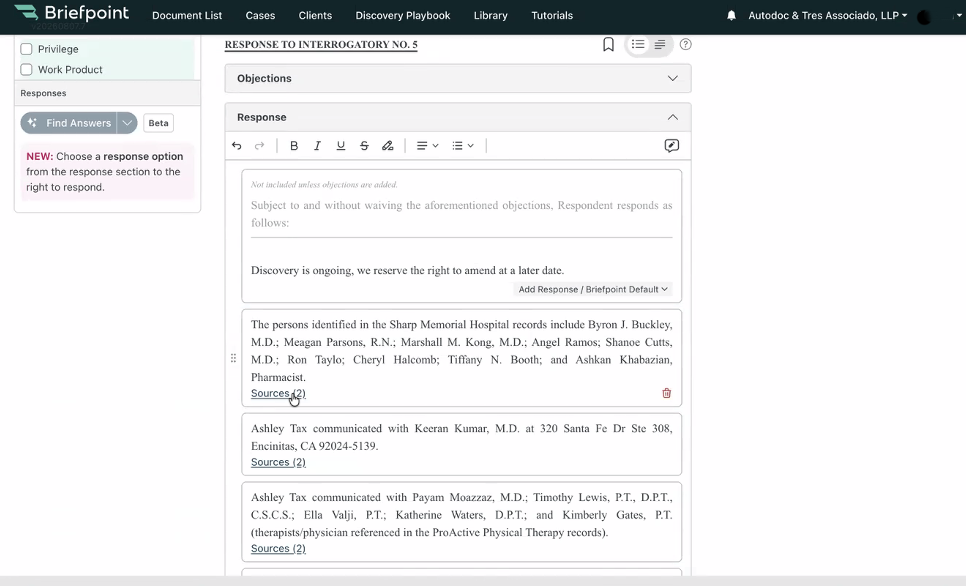
That connection to the underlying sources matters. AI can do the heavy lifting of locating and organizing information, but you can still review exactly where each answer came from. When the document will ultimately become part of a formal discovery response, that traceability matters far more than simply getting a fast answer.
Briefpoint can also learn from how your firm responds. Discovery Playbooks identifies requests similar to ones you’ve answered before and retrieves the objections you previously used. You can reuse that position, adapt it to the new matter, and, if needed, limit the playbook to a specific client, jurisdiction, or case type. The idea isn’t for AI to decide what your discovery strategy should be. It’s to help you keep that strategy consistent.
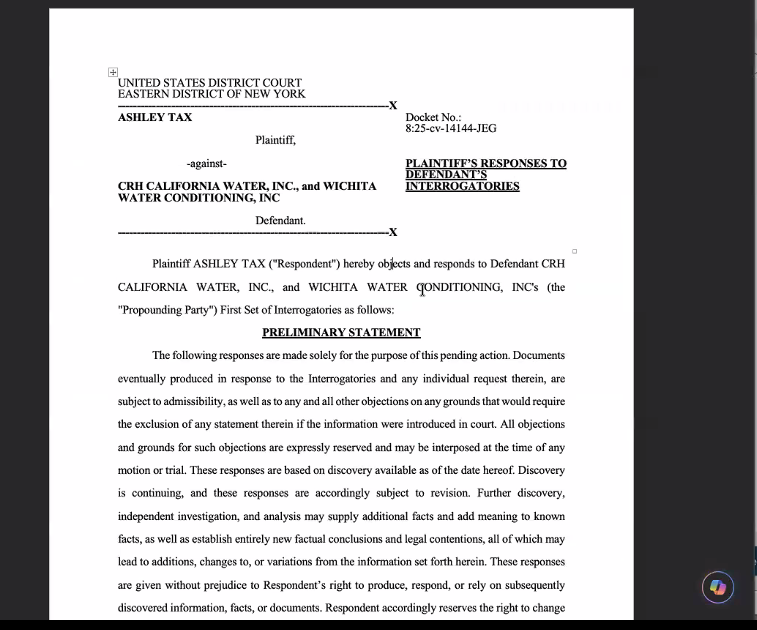
Once you’re finished, Briefpoint converts the work into a Word document with the structure and formatting appropriate for the jurisdiction. Instead of starting with a blank page and rebuilding the formatting manually, you receive a document that already contains the objections, responses, and structure needed to continue working.
The result is less spectacular than what much of legal AI promises, and that’s precisely why it’s interesting. Briefpoint isn’t trying to replace the lawyer’s judgment. It’s trying to remove the hours spent preparing, organizing, verifying, and formatting discovery so that judgment can stay focused on what actually matters.
Cost
Briefpoint offers a single plan at $150 per attorney per month, billed annually at $1,800 per year. The price includes all platform features, from discovery generation and responses to client document and response collection, Bates-stamped production packages, supplemental responses, and Discovery Playbooks. There are no per-matter fees, and document downloads are unlimited.
There is no self-service free trial. To get familiar with the platform, Briefpoint offers a demo before you commit. For a firm that handles discovery regularly, the model is straightforward: one fixed price per attorney, with no additional charges per matter or document.
Why It Works
Briefpoint is narrow by design, and that narrowness is its value. It doesn’t try to conduct legal research, manage your matters, or summarize depositions. It focuses on a part of litigation that consumes hours without necessarily requiring more legal strategy: preparing discovery, matching documents, managing objections, and doing all the Bates work that no client enjoys paying for and no lawyer enjoys doing. And because the result comes in Word, with citations tied to the corresponding pages, you get a draft you can finish rather than one you have to rebuild. The approach isn’t trying to do everything. It’s trying to do one thing very well that law firms do constantly.
Privacy & Confidentiality
Briefpoint is SOC 2 Type II certified, HIPAA compliant, and offers Business Associate Agreements (BAAs) for firms handling protected health information. Data is encrypted in transit and at rest, isolated by account, and Briefpoint states that information submitted is not used to train its models or third-party models. There is one distinction worth understanding before uploading a case file: Briefpoint’s zero-retention language applies to the AI layer, not to document storage. Case materials can remain in your account, with daily backups and deletion available upon request. For most firms, that distinction is unlikely to be a dealbreaker, but if your firm has specific retention requirements, it’s worth clarifying how those policies apply to stored case documents.
Verdict
If your practice doesn’t involve written discovery, Briefpoint isn’t for you, and that’s precisely the point. If it does, it’s one of the few legal AI products focused specifically on a part of litigation that consumes significant time without necessarily requiring significant legal judgment. I’d want to test it against my most difficult discovery file before committing to a year, particularly to see how its privilege controls hold up in a real matter. But the premise is solid, and its focused approach is precisely what makes it compelling.
The opposing counsel who serves you with 42 requests isn’t betting that you can’t answer them. They’re betting on what it will cost you to do it.
Have Feedback?
I’ve reserved a special space each week for you to vent, supplement with relevant info, or ask questions about the product. The only way the content gets better is if you participate. I look forward to hearing from you! You can e-mail me here.